
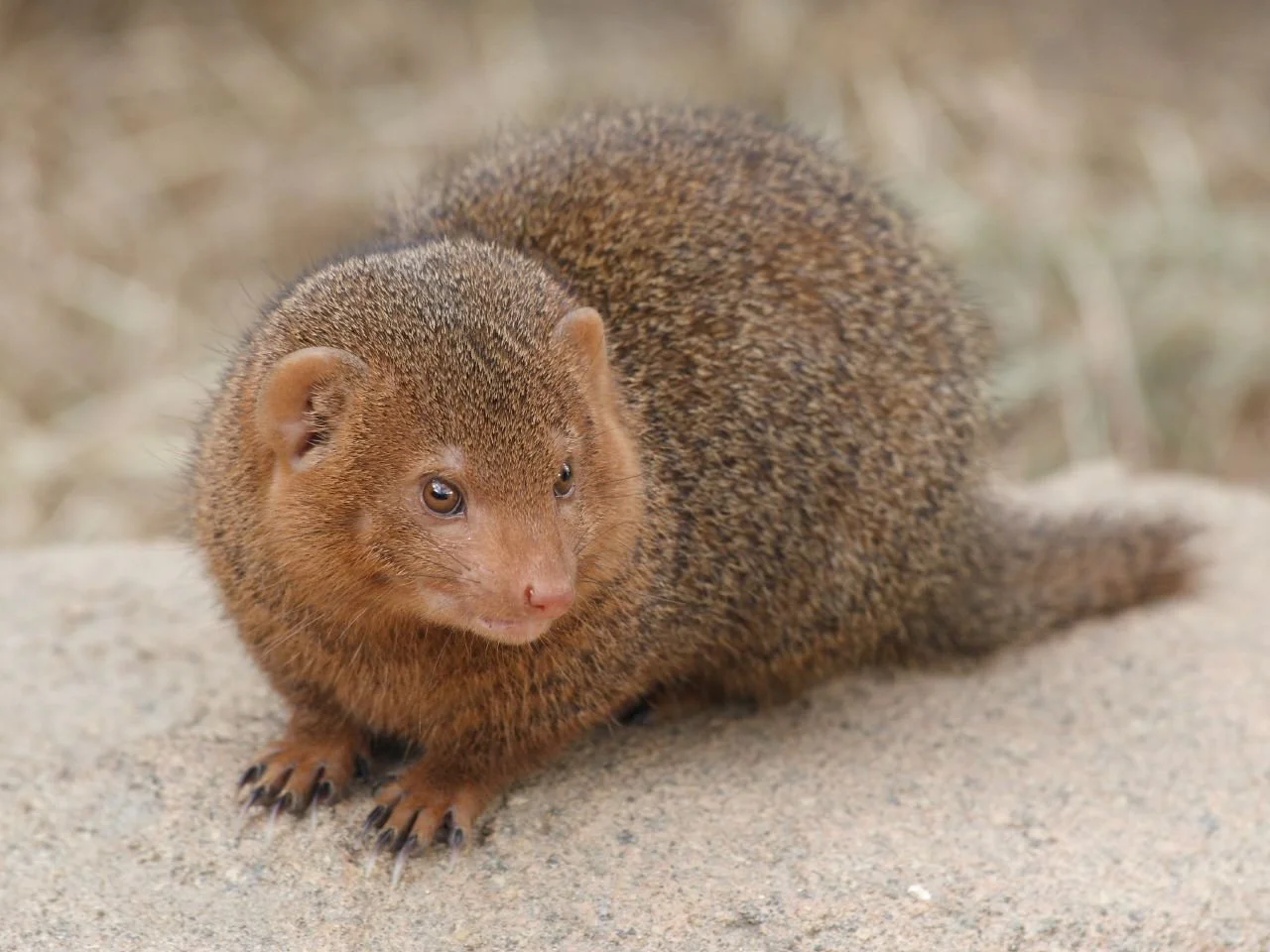
DWARF MONGOOSE
Helogale parvula
The dwarf mongoose is Africa’s smallest species of mongoose and one of the smallest omnivores on the continent, tiny, curious, and full of personality. These sociable little mammals live in family groups and spend their days foraging, grooming, and looking out for each other in the wild.
Diet:
Dwarf mongooses are omnivores, but they mainly eat insects such as beetles, termites, and grasshoppers. They’ll also eat small reptiles, birds’ eggs, fruit, and occasionally small mammals.
Habitat:
They are found across sub-Saharan Africa, living in savannahs, grasslands, woodlands, and areas with termite mounds or rocky crevices, which they use for shelter.
Adaptations:
Their small size allows them to hunt insects efficiently and escape into narrow burrows. They have excellent communication skills, using a wide range of vocal calls to warn the group about predators like birds of prey or snakes.
Social Structure:
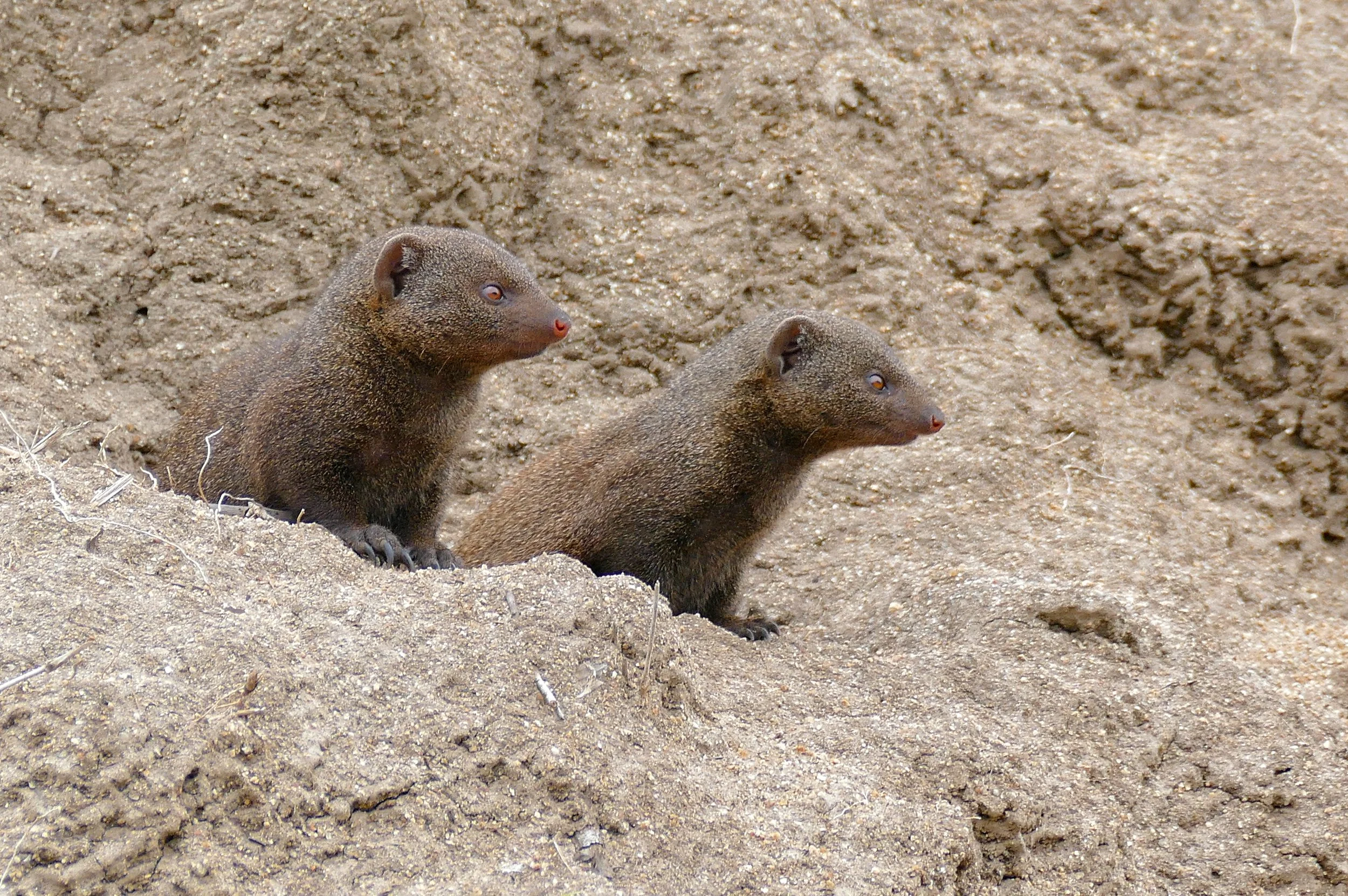
Dwarf mongooses are highly social, and can live in family groups of up to 30 individuals. There is usually a dominant breeding pair, while the rest of the group helps raise and protect the young.
Individuals:
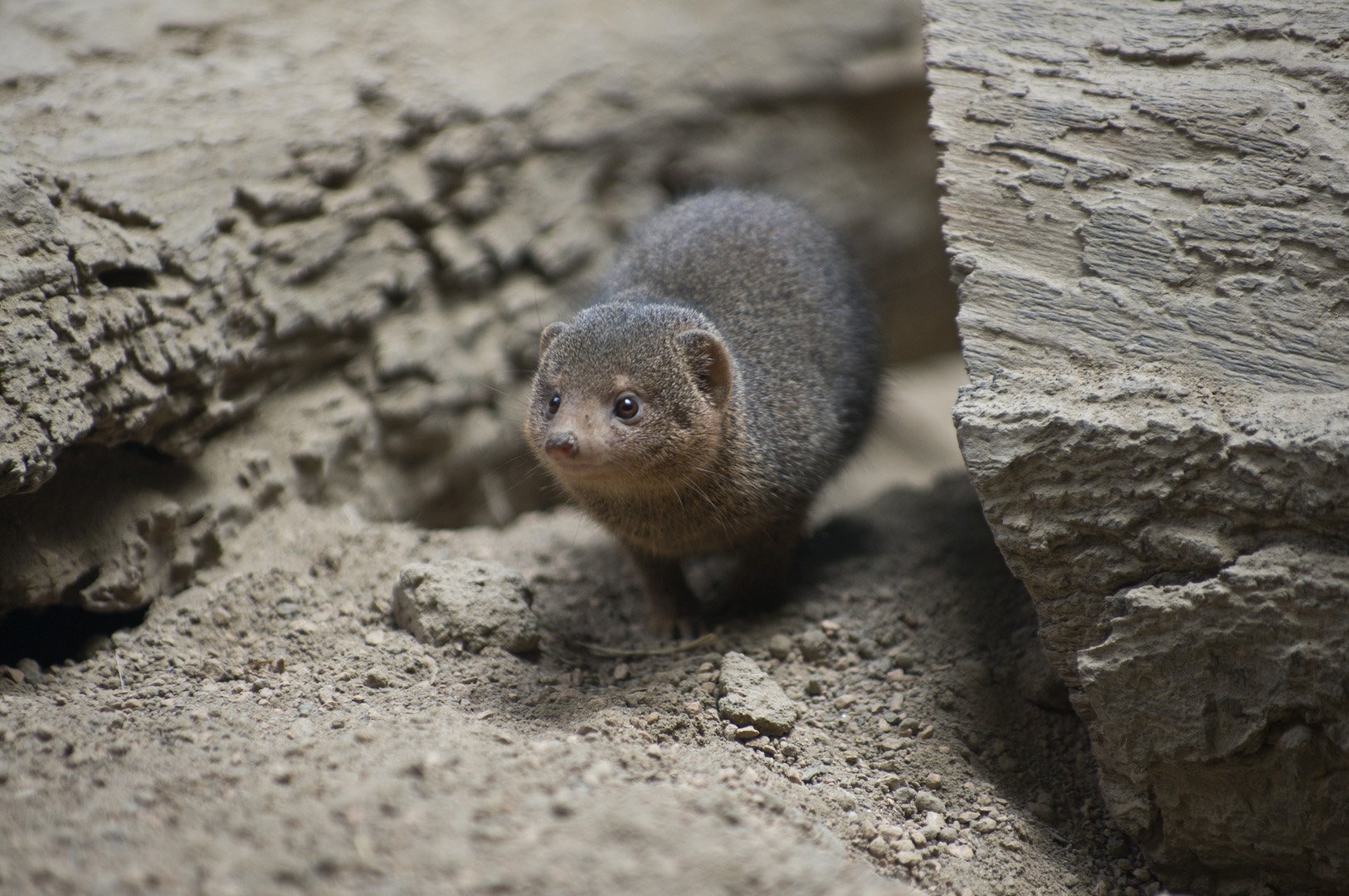
Each mongoose has its own personality; some are more confident and curious, while others prefer to stay close to cover. You might notice certain individuals acting as lookouts while others feed. Our mongoose are called gorgon & zola - a pair that will hopefully be starting a family soon!
Lifespan:
In the wild, dwarf mongooses typically live around 6–8 years.
In zoos, where there’s no predation and they receive veterinary care, they can live 10–12 years or more.
Threats in the wild
Dwarf mongooses are currently listed as Least Concern on the IUCN Red List, which means they are not endangered right now. However, that doesn’t mean they’re unaffected by environmental change. One growing challenge they face is changes in rainfall linked to climate change. In parts of Africa, rainfall is becoming more unpredictable, with longer dry periods followed by heavier rain. This affects insect populations, which are the dwarf mongoose’s main food source. When insects are harder to find, it can be especially challenging for family groups to successfully raise their young.
This is a good reminder that even species we think of as “common” can be impacted by climate change through changes to their habitats and food supply.
WHAT VISITORS HAVE SAID
