
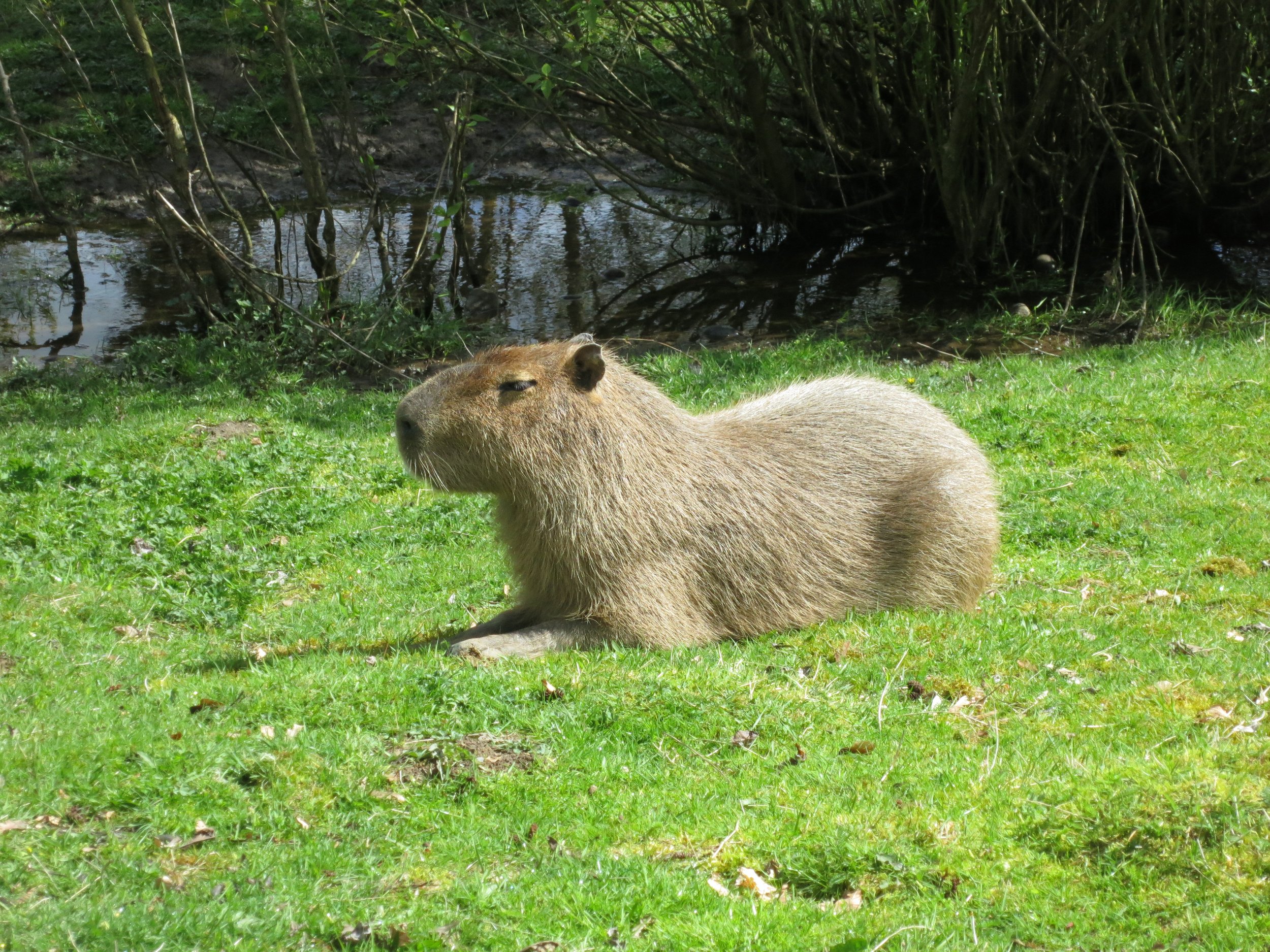
CAPYBARA
Hydrochoerus hydrochaeris
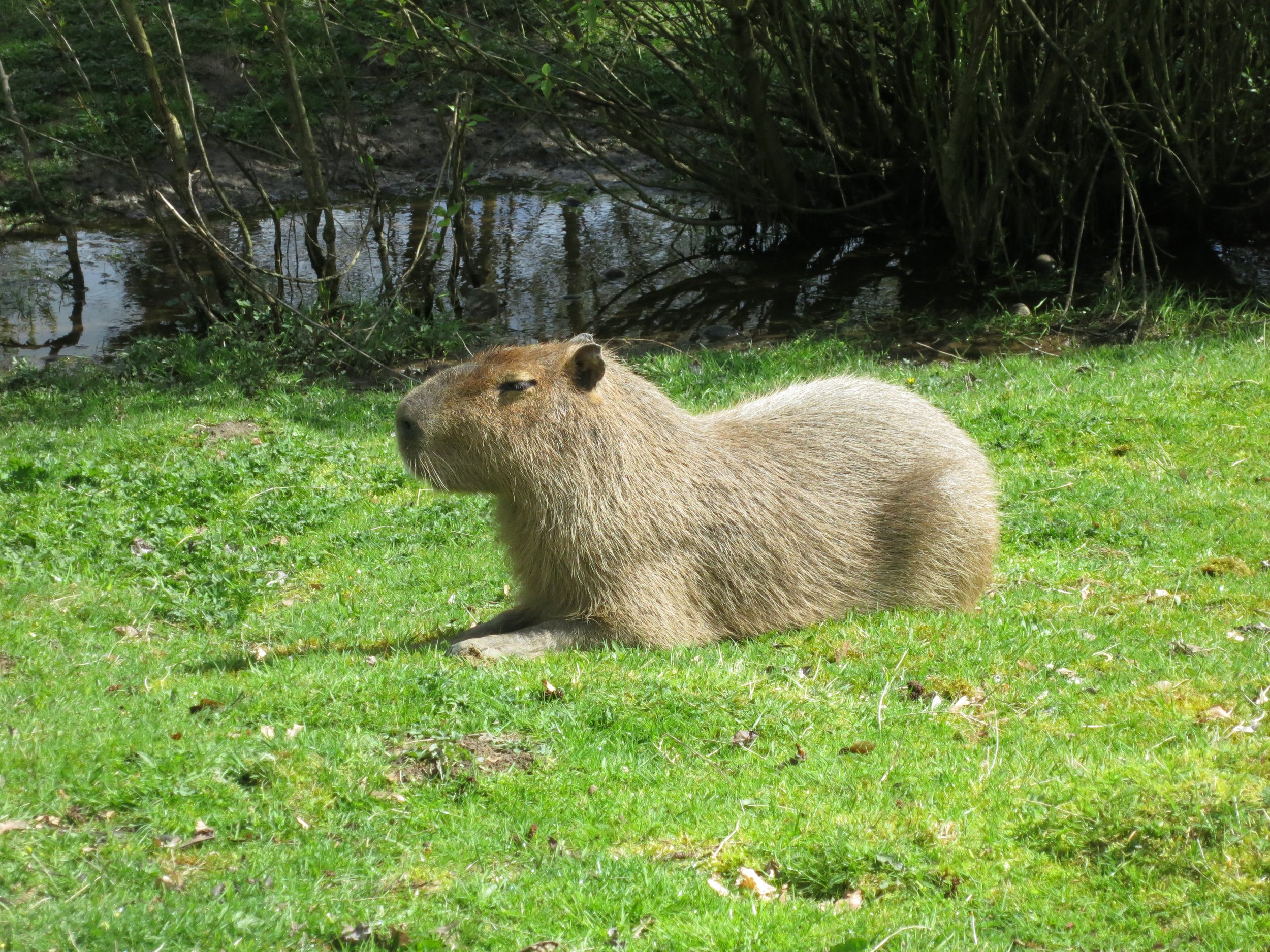
The capybara is the largest rodent in the world, a calm, social, semi-aquatic mammal native to South America. These gentle giants spend much of their time grazing on grasses and soaking in water, where they are perfectly adapted to swim and evade predators.
These animals are found across much of South America, from Panama and Colombia through Brazil and Bolivia to Argentina and Uruguay, living in and around water where they can feed and cool off.
You can find our capybaras in our Wallaby Walkthrough!
Diet:
Capybaras are strict herbivores, grazing mainly on grass and aquatic plants, and sometimes eating tree bark and fruit. Their teeth grow continuously, helping them process tough vegetation.
Adaptations:
Capybaras have partially webbed feet, which act like paddles in the water. Their strong hind legs give them power for swimming and quick escapes from predators. Their eyes, ears and nostrils are positioned high on the head, allowing them to see, hear and breathe while the rest of their body stays underwater, this helps them stay hidden from predators such as jaguars and caimans. Capybaras can hold their breath for up to five minutes, using water as a safe refuge when threatened. Their fur is coarse rather than fluffy, which dries quickly after swimming and helps prevent skin problems in damp environments.
Social Structure:
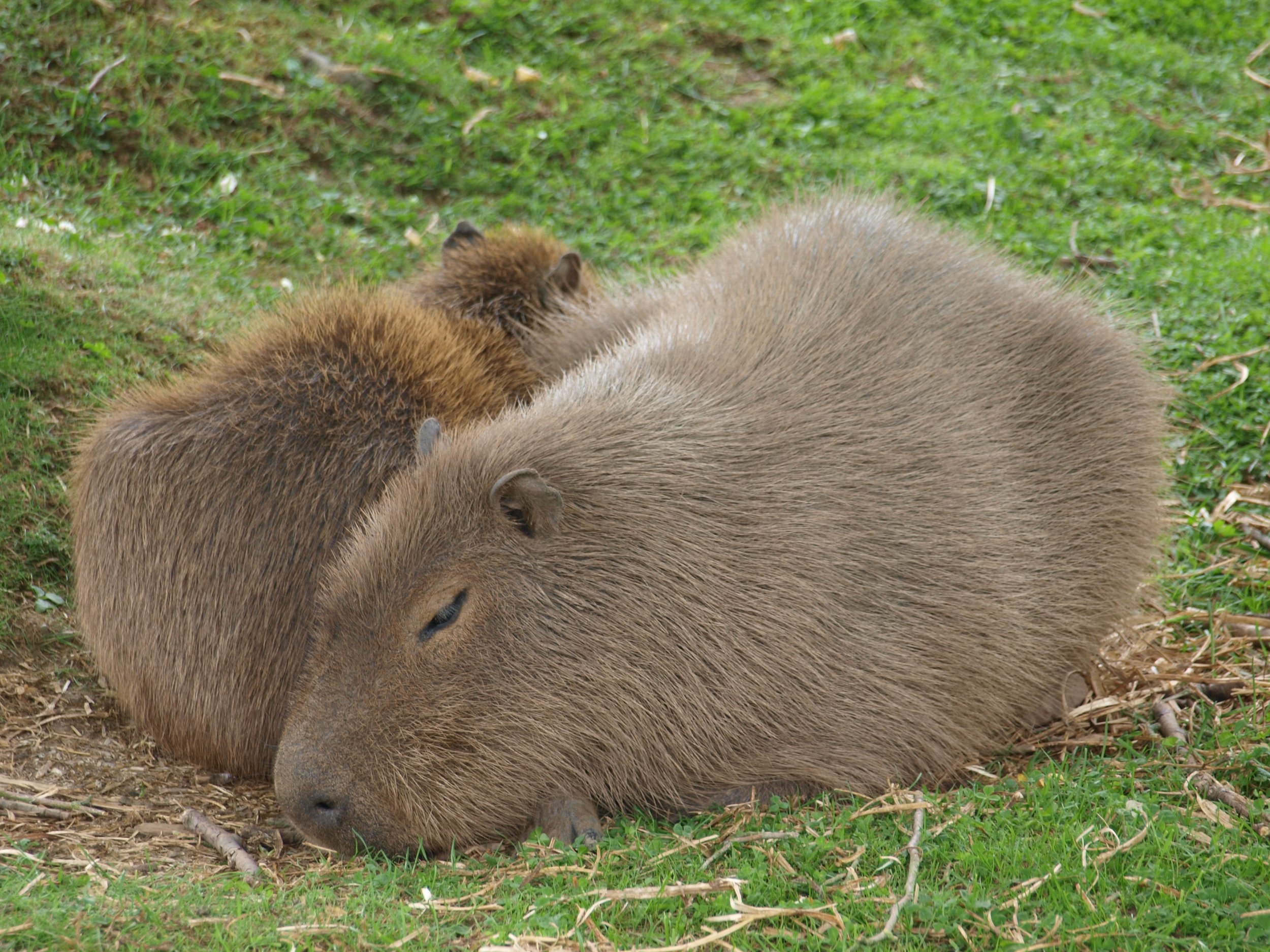
Highly social, capybaras typically live in groups of 10–20 but can form large herds of up to 100 in the dry season when water is limited. Within a group, they communicate through whistles, barks and purrs, and engage in mutual grooming.
Threats in the wild
Capybaras are currently classed as Least Concern due to their wide range, adaptable nature, and large population. While not globally threatened, they face local pressures from hunting and habitat loss in some regions.
WHAT VISITORS HAVE SAID
